Why visit Shiobara
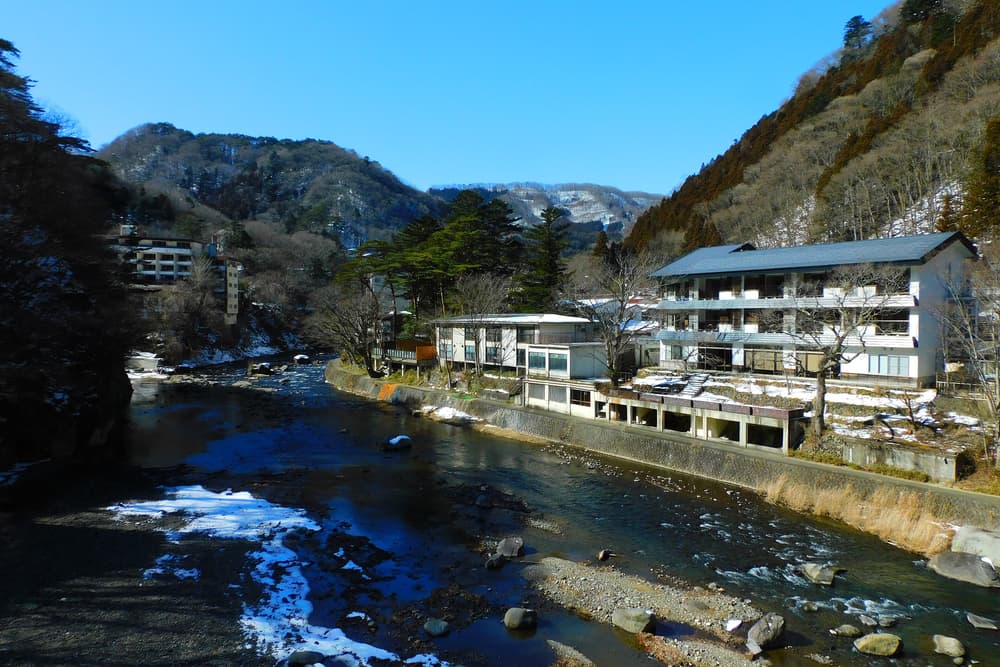
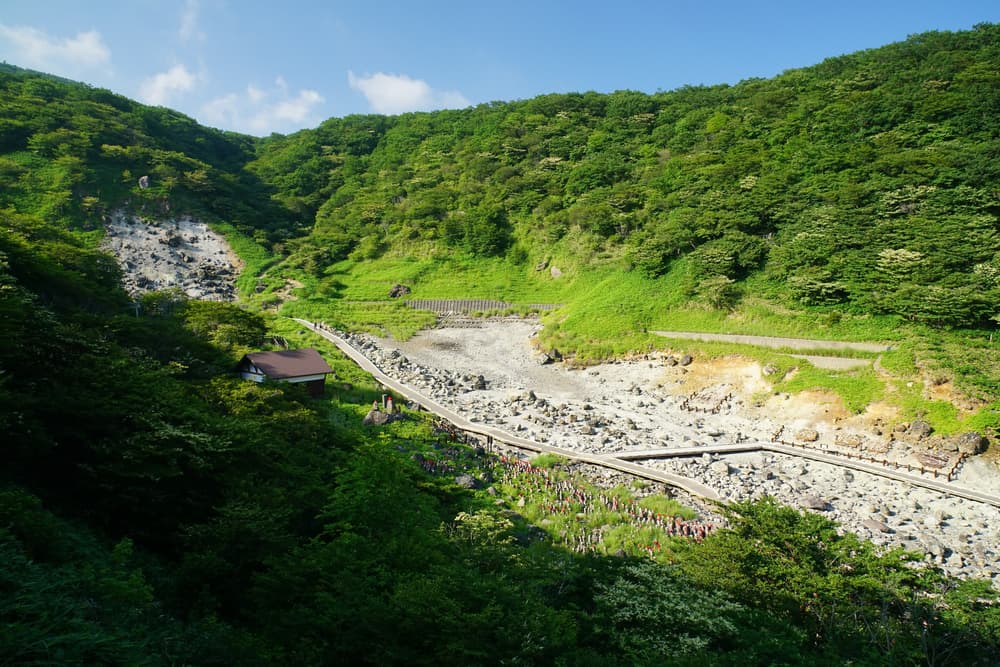
Shiobara’s springs are said to have been discovered in 806, and the valley has drawn bathers ever since. In the Meiji era it became a literary retreat: novelists such as Natsume Soseki and Ozaki Koyo stayed and wrote here. The collective name, Shiobara Onsen-kyo, covers eleven small spring areas along 10 km of the Hoki River, with waters of different colours and mineral types.
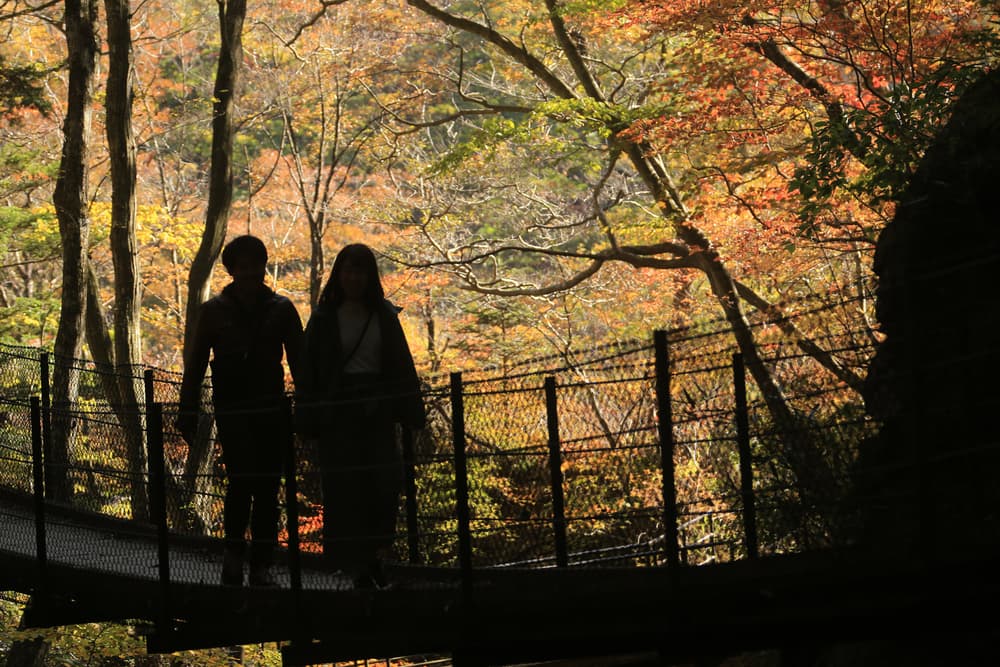
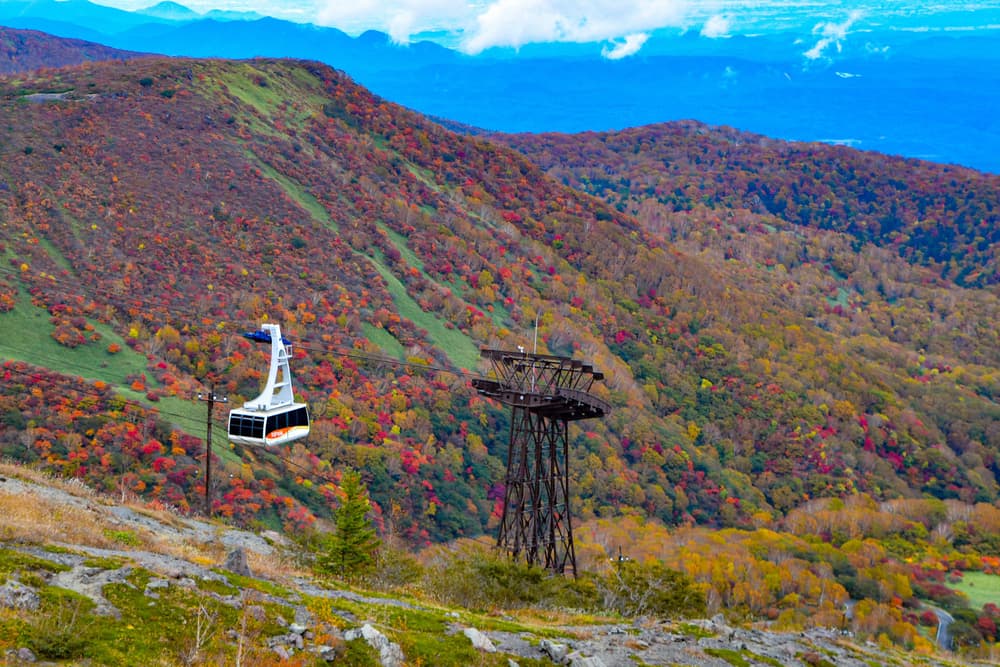
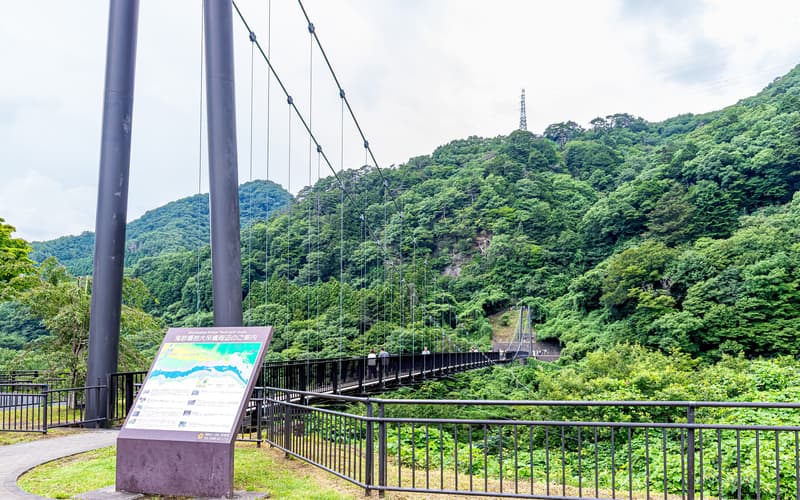
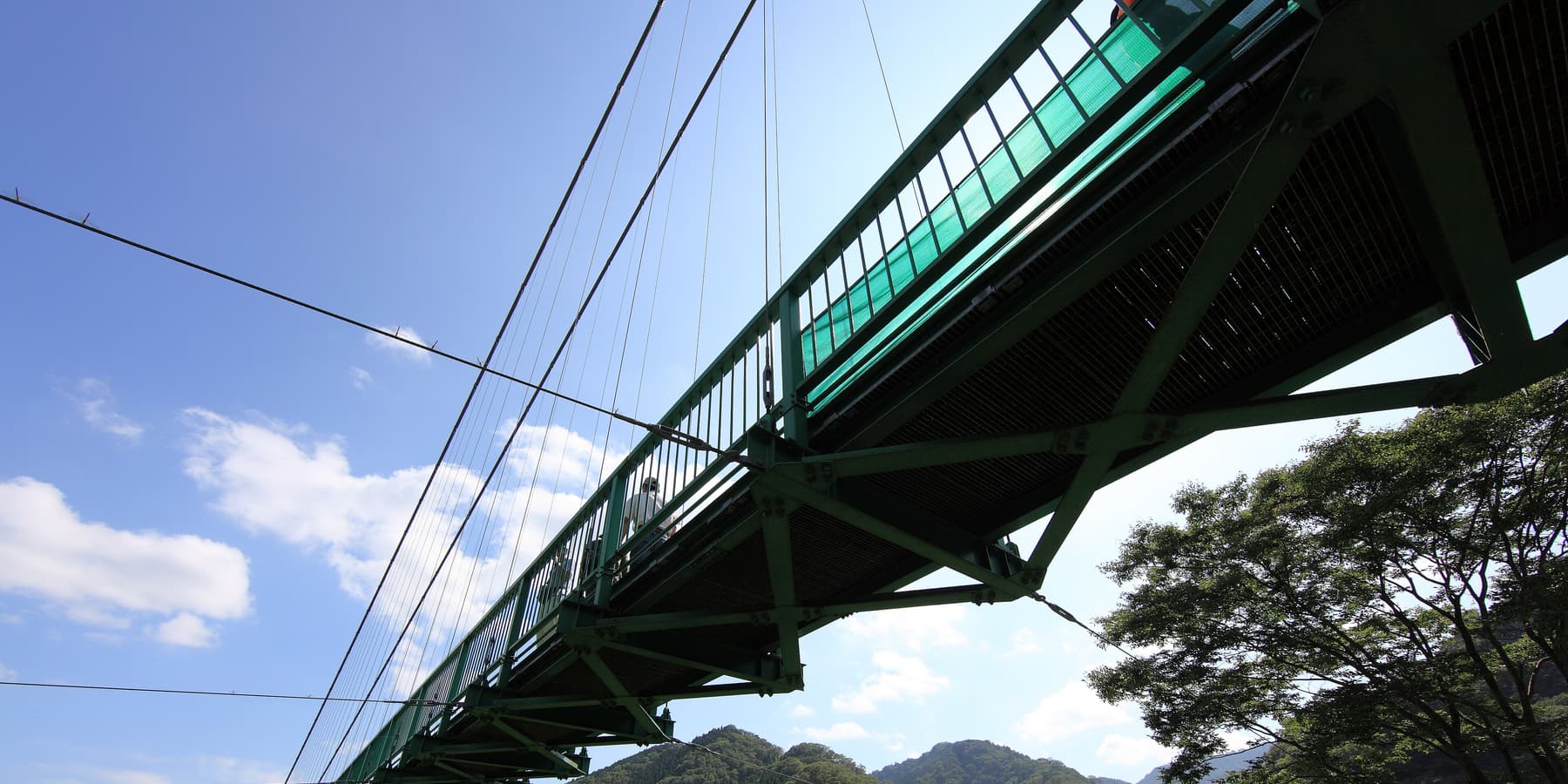
What sets it apart is the gorge itself. A riverside trail links suspension bridges and dozens of waterfalls, and at the valley mouth one of the longest pedestrian suspension bridges in eastern Japan crosses a reservoir. In late October and November the whole valley turns red and gold.
The mood is unhurried: traditional inns, a few noodle shops, steam rising by the roadside. It combines well with Nasu, 45 minutes away by car.
How long to stay
One night is right for most people: an afternoon on the gorge trail, an evening in the baths and a morning at the foot bath or a waterfall.
Where to base yourself
The central hamlets — Fukuwata, Shiogama, Monzen and Furumachi — are within walking distance of the bus terminal, shops and trailheads. Outlying springs such as Moto-yu and Oku-Shiobara are for those with a car who want seclusion.
Shiobara Onsen highlights
- Walking the 320-metre Momijidani suspension bridge
- The gorge trail between Fukuwata and the town centre
- Ryuka Falls, a three-tier cascade in a mossy ravine
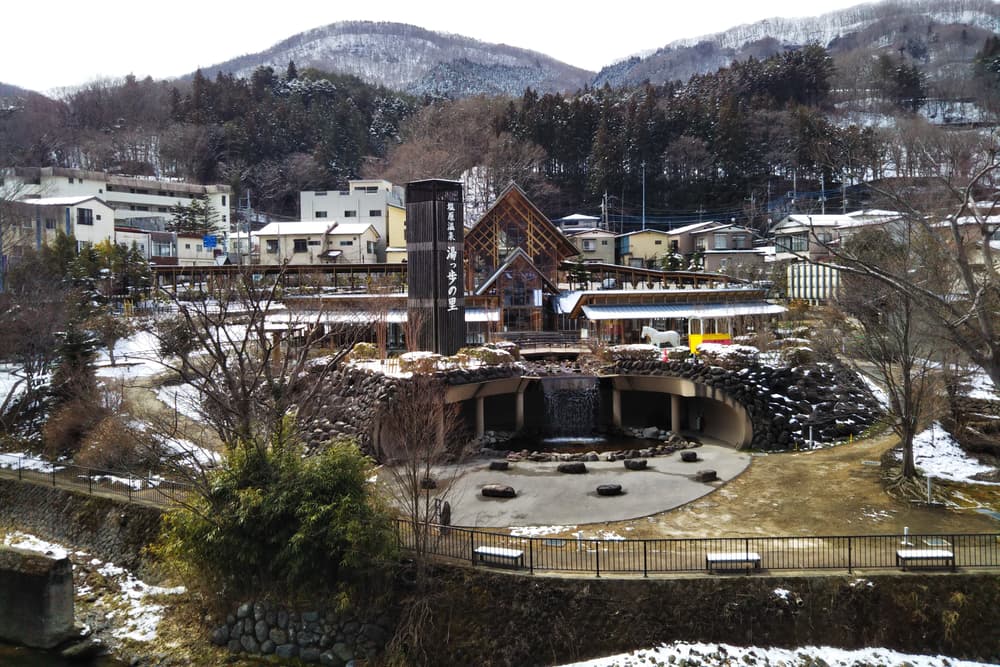
- A 60-metre foot-bath corridor at Yuppo-no-Sato
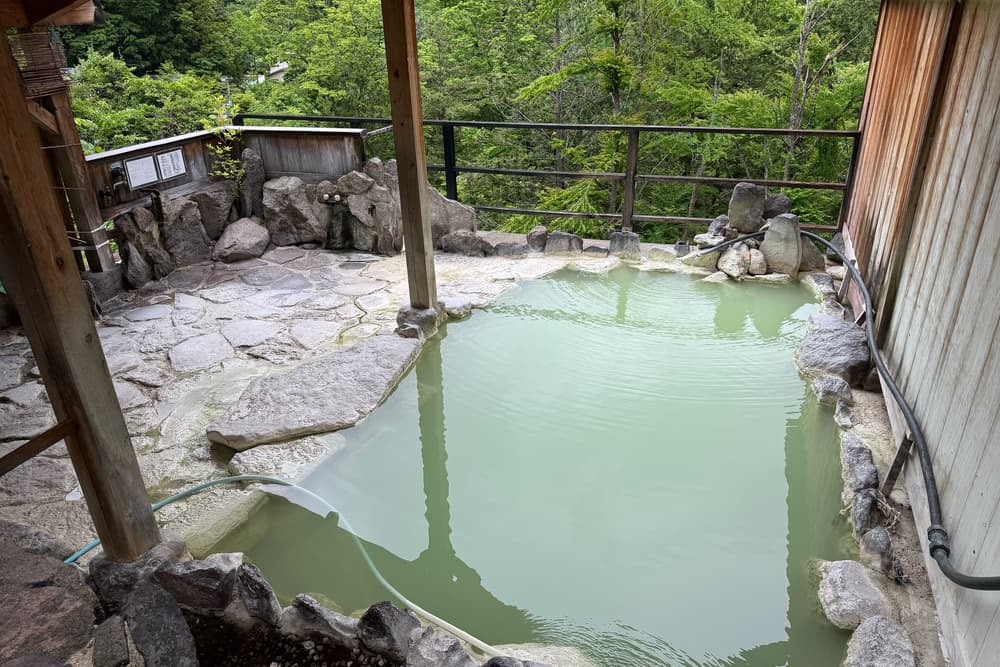
- Milky and tea-coloured springs at Moto-yu and Shin-yu
- Soup yakisoba, the town’s curious noodle speciality